 POLAB
POLABResearch
Three fields, one toolbox — scheduling, optimization and simulation for manufacturing and logistics systems.
POLAB works on scheduling, optimization, and simulation for manufacturing and logistics systems. Every project starts with a question about structure — is the process cyclic, are resources shared, are there waiting-time limits — and the answer decides which tool we reach for. The goal is an algorithm that a site engineer can run every day, not only a paper.
- Scheduling Theory flow shop · cyclic & reentrant systems · robotic cells · timed Petri nets
- Structural properties of optimal schedules, complexity results and polynomial algorithms — proven rather than assumed. Robots, chambers and cranes that share resources are modelled as timed Petri nets and searched over their reachable states.
- Optimization Technique exact algorithms · metaheuristics · polynomial-time algorithms
- Exact models (MILP, constraint programming) for allocation, layout and routing, decomposed where the structure allows it; metaheuristics for instances too large for exact methods; polynomial-time algorithms where the problem structure admits them.
- Modeling and Simulation discrete-event simulation · digital twin
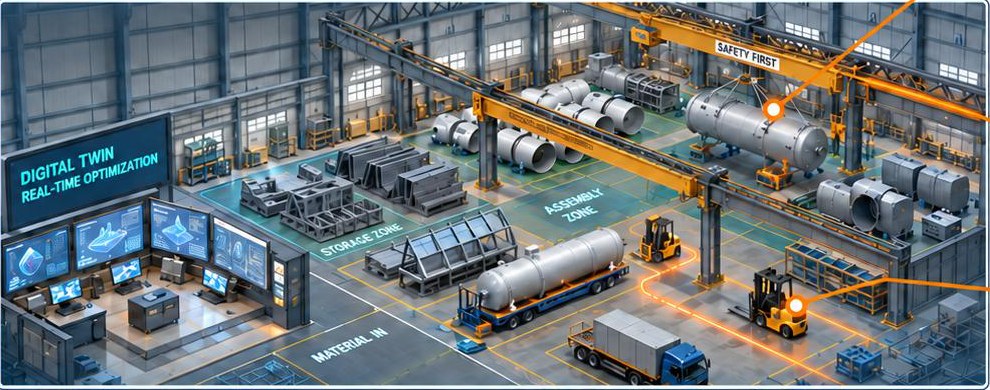
- Discrete-event models of terminals, shipyards and cluster tools that test a schedule against real variability before deployment; digital twins that keep the model in step with the site.
and Logistics

Port Automation and Logistics Busan container terminals · optimization & discrete-event simulation
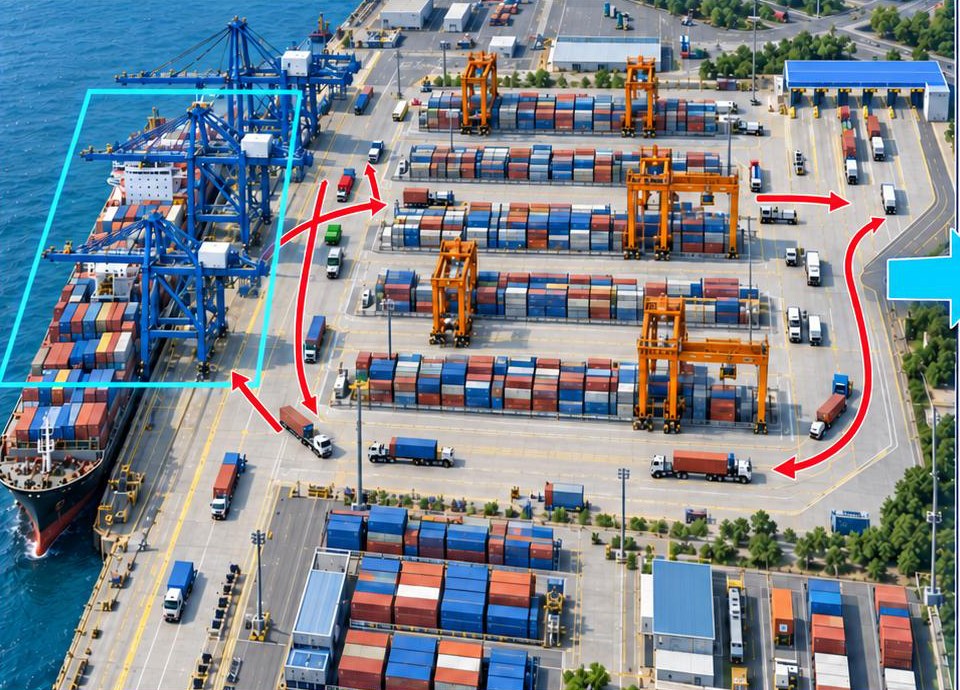
From the moment a vessel berths until it sails, quay cranes, yard cranes and trucks compete for the same space. We treat berth allocation, crane work sequences, yard block placement and truck dispatch as one scheduling problem and validate every plan in a simulator.
Problems
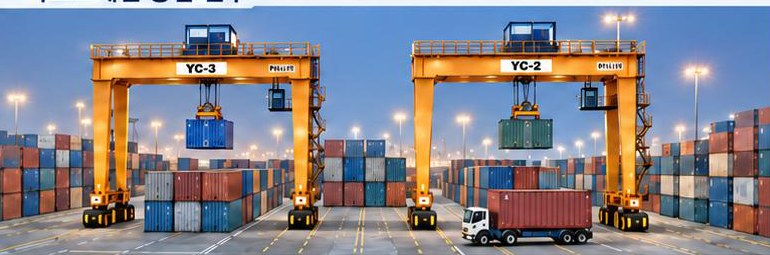
- Crane scheduling — QC initial planning under uncertainty; re-optimization after delays or breakdowns; real-time YC scheduling with safety-distance constraints.
- Vehicle routing — AGV / yard-truck synchronization, dynamic assignment and route search.
- Stacking optimization — pre-marshalling and re-handling reduction, with incoming placement planned together with current re-stacking.
- Performance diagnosis — LB/UB-based evaluation of how far an operation is from its productivity ceiling.
Partners & funding
- Industry
- Dongwon Global Terminal Busan, Hanjin Busan Container Terminal, CyberLogitec, Total Soft Bank
- Funding
- NRF Outstanding Young Researcher (2024–2029) — port yard & berth optimization under spatial interference; NIPA META K-PORT intelligent logistics platform (2023–2027)

Marine Equipment Manufacturing
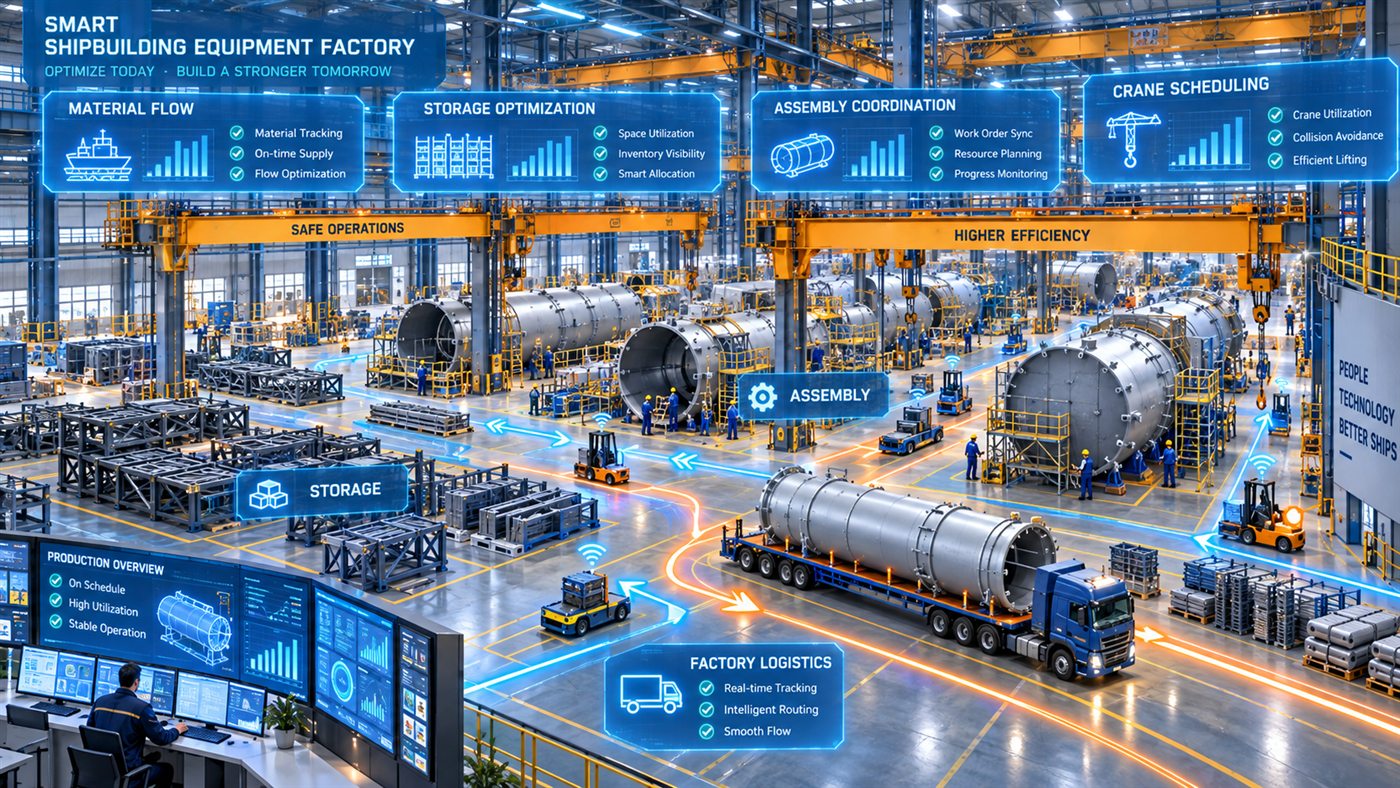
Ship Building & Marine Equipment Manufacturing Shipyards and equipment makers in the Busan–Gyeongnam region · project scheduling & layout optimization
A ship is thousands of blocks, tens of thousands of steel plates and a multi-year workforce plan. We level the workforce load on LNG cargo-tank work, free floor space through better cell placement, and cut material loss with better cutting plans. With the marine-equipment cooperative we solved dispatch and routing problems.
Problems
- Production planning & space optimization — cell allocation for large structures with irregular shapes; freeing idle cells while meeting due dates.
- Workforce leveling — smoothing subcontractor demand across concurrent LNG cargo-tank projects.
- Crane scheduling — overhead cranes sharing a rail: interference and safety distance.
- Project scheduling — heavy-lift moves and factory logistics (routing, dispatch, overload prevention).
- Cutting & nesting — plate and coil cutting plans that raise material utilization.
Partners & funding
- Industry
- Samsung Heavy Industries, Panasia, DSME, Shinhan Steel, Busan Marine Equipment Association (BMEA)
- Funding
- NIPA Regional Digital Innovation Project (2024–2026) — productivity innovation for the regional marine-equipment industry
and Automated Manufacturing

Robotized and Automated Manufacturing (Semiconductor & Automotive)Semiconductor & automotive · automation & scheduling
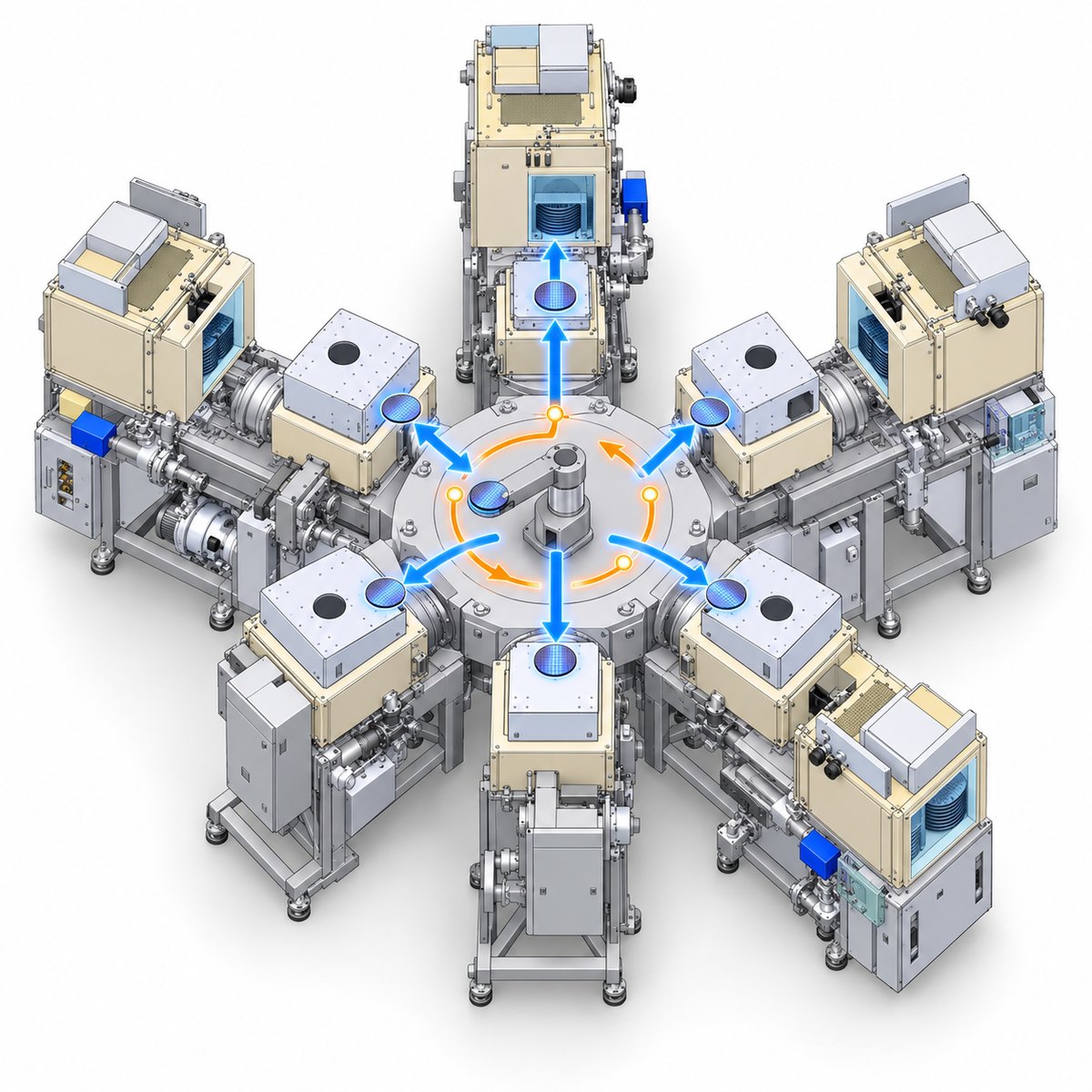
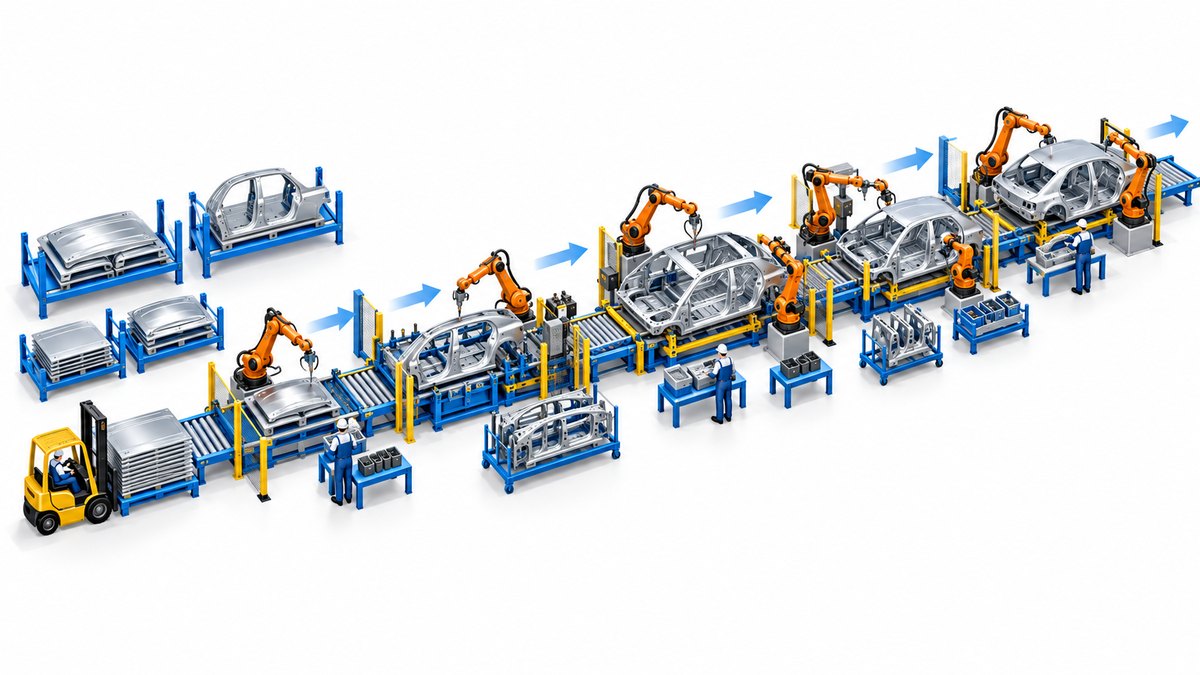
This is the theoretical root of the lab. Robot scheduling of semiconductor cluster tools — modelled with timed Petri nets — produced most of our IEEE TASE papers and the IEEE RAS best-paper award. The same approach now extends to automotive body-part production: coil-width selection and cutting plans, and automatic assembly-line design.
Problems
- Robot scheduling — dual-armed cluster tools, wafer-delay constraints, chamber cleaning, feedback control against time disruptions.
- Process optimization — assembly-line design: generating equipment specifications from 2D drawings, 3D models and process data.
- Cutting stock — coil-width standardization and cutting plans for body parts.
- Flow-shop scheduling — reentrant and proportionate flow shops with maintenance and waiting-time constraints.
Partners & funding
- Industry
- Sungwoo Hitech, Sewon Metal; earlier work with Lam Research, SEMES, SK hynix, Samsung Electronics
- Award
- IEEE RAS Best Semiconductor Manufacturing Automation Paper in Theory (2021)
- Funding
- NRF Regional University Excellent Scientist (2020–2023); ERC Human-centred Carbon-neutral Global Supply Chain (2023–2030)